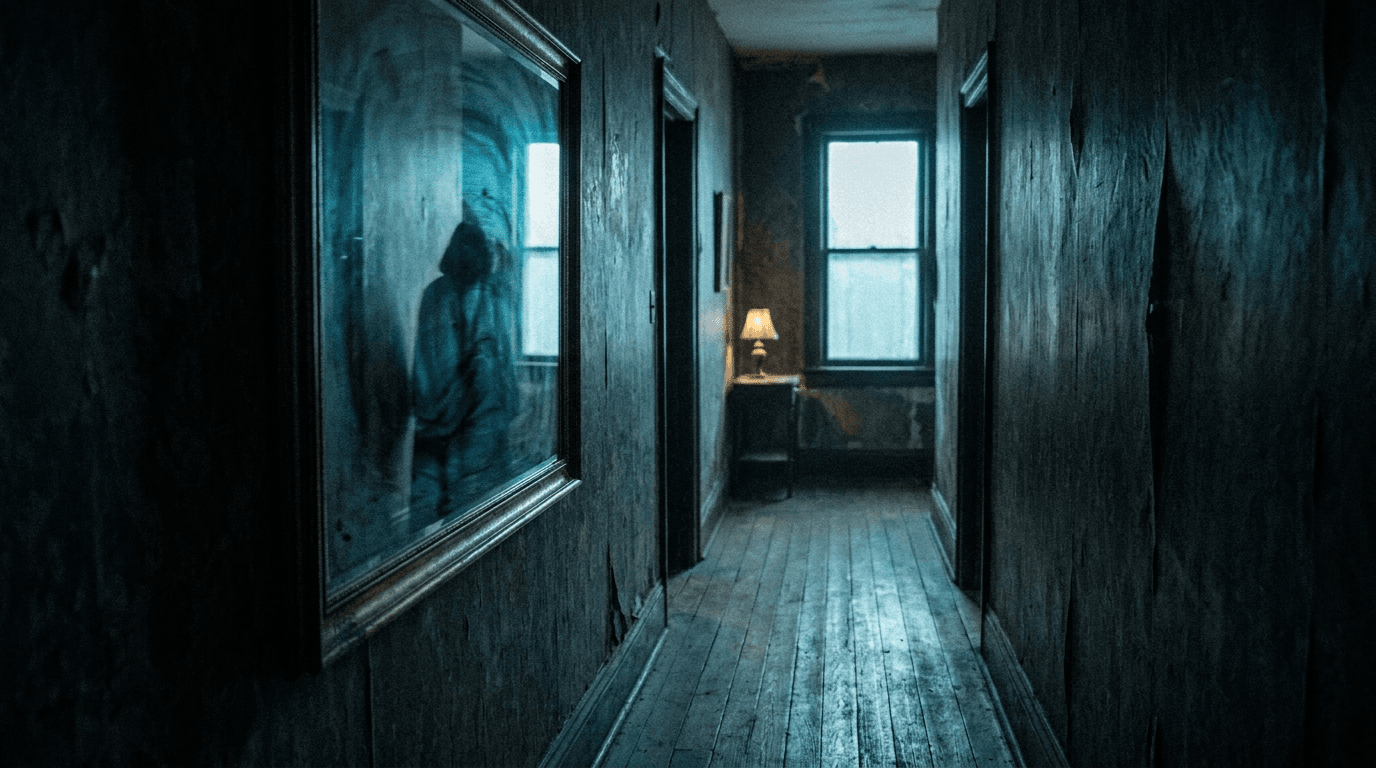
Why Do We See Ghosts? The Psychology and Physiology Behind Apparitions
You've probably heard stories of people seeing a figure standing at the end of their bed, or catching a glimpse of someone in an old mirror who wasn't there when they turned around. These experiences
You've probably heard stories of people seeing a figure standing at the end of their bed, or catching a glimpse of someone in an old mirror who wasn't there when they turned around. These experiences are incredibly common across cultures and throughout history. But what actually causes them?
Modern research in psychology, neuroscience, and environmental science has revealed several well-understood pathways that can produce apparition-like experiences — without needing to invoke spirits.
The Brain Creates Its Own Reality
Our brains are prediction machines. They constantly generate expectations about what we should see and hear, then compare those predictions against incoming sensory information. When the sensory information is incomplete or ambiguous (poor lighting, peripheral vision, tired brain), the brain fills in the gaps — sometimes with things that aren't there.
This is called pareidolia when it happens with faces or figures in random patterns, and it's completely normal. It's the same reason we see faces in clouds or on the surface of Mars.
Common Triggers for Apparition Experiences
Research has identified several reliable triggers:
Sleep-related states. The moments between waking and sleeping (hypnagogic) or falling asleep and waking (hypnopompic) are when many people report seeing figures or sensing presences. During these states, the brain is in a mixed state of consciousness, and visual hallucinations are common.
Sleep paralysis. This is when your body is still "asleep" (paralyzed) but your mind has woken up. It's often accompanied by a powerful sense of a presence in the room and sometimes visual hallucinations of figures. It's terrifying but completely biological.
Grief and emotional states. After losing someone, many people report seeing or sensing the deceased person. This is so common it's considered a normal part of grieving by psychologists. The brain is still "looking for" the person it expects to see.
Environmental influences. Certain physical conditions can make apparition-like experiences more likely: - Infrasound (very low frequency sound) can create feelings of dread and visual distortions - Electromagnetic fields can influence temporal lobe activity, sometimes producing sensed presences - Poor lighting dramatically increases pareidolia
Why Some Cases Feel So Real
Even when we understand the mechanisms, many apparition experiences feel completely real to the person having them. This is because the brain doesn't usually label its own creations as "hallucinations." When you see something in peripheral vision or during a half-awake state, your brain presents it as external reality.
This is why "I know what I saw" is such a common statement. The person isn't lying or imagining things in the casual sense — their brain genuinely constructed the experience as real.
What About the Cases That Can't Be Explained This Way?
There are well-documented cases where multiple independent witnesses saw the same figure at the same time, or where the apparition provided accurate information the witness couldn't have known. These are much harder to explain through normal psychological or environmental mechanisms.
Researchers continue to debate whether these rarer cases represent something genuinely anomalous, or whether we simply haven't identified all the normal pathways yet.
The Bottom Line
Most apparition experiences have natural explanations rooted in how the human brain works and how environments affect perception. Understanding these mechanisms doesn't make the experiences any less meaningful or frightening to the people who have them — but it does give us better tools for understanding what's actually happening.
At the same time, a small number of cases continue to resist easy explanation and keep the bigger questions open.
Want the Full Research?
Download the complete academic papers on this topic: - Apparitions & Visual Phenomena - Human Physiology & Psychology
These contain all the studies and references behind this article.
Have you ever seen something you couldn't explain? Many people have — and science is getting better at understanding why.
Part of a series making paranormal research accessible to everyone.