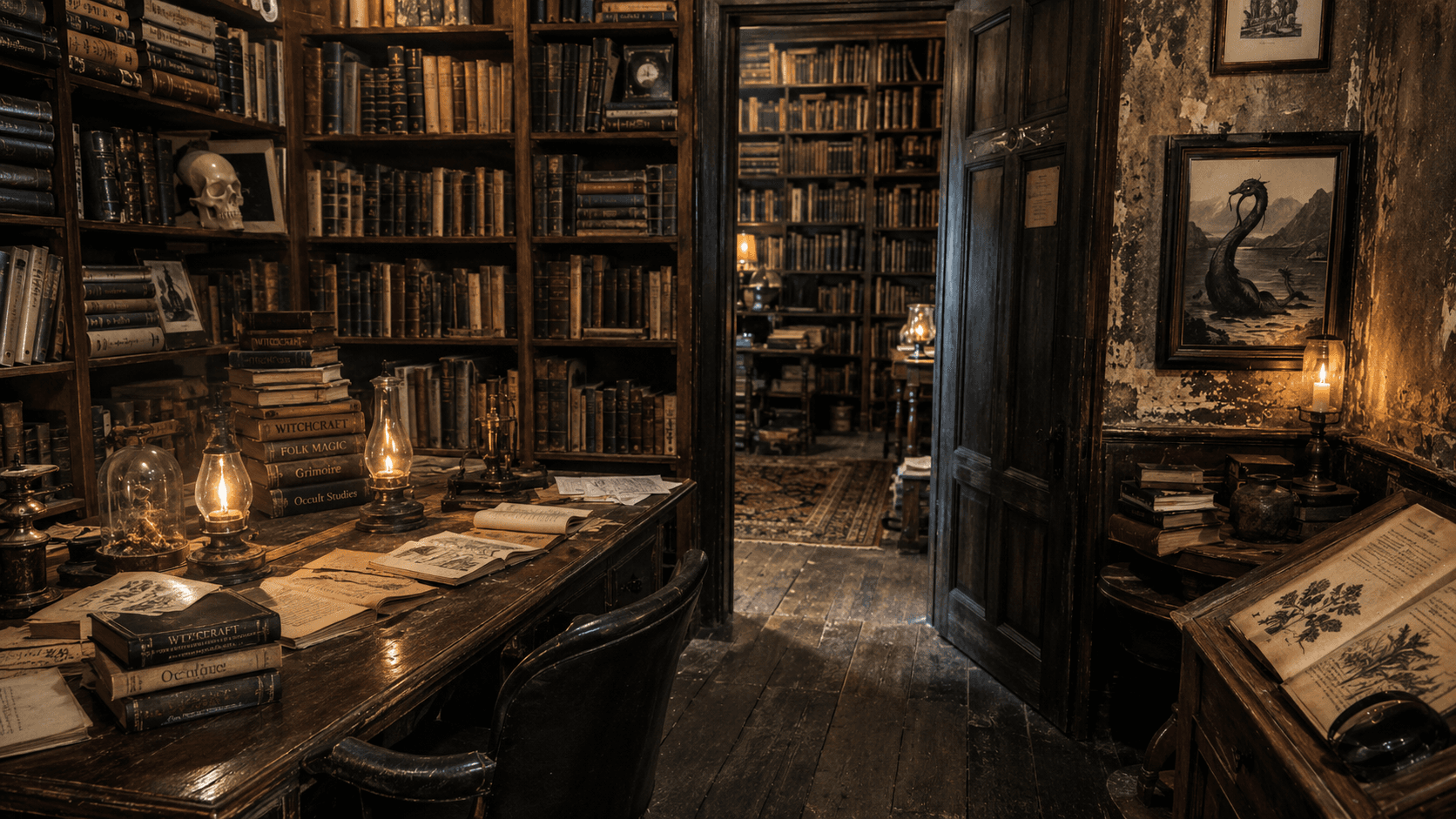
Overview
The Book of Abramelin presents itself as a paternal testament written by Abraham of Worms for his son Lamech. The narrator describes travels in search of magical wisdom and a system learned from the Egyptian sage Abramelin. The claimed medieval Jewish autobiography is part of the book’s narrative authority; the securely evidenced textual tradition is early modern and principally German. The system combines an extended period of prayer, moral discipline, regulated living and withdrawal from ordinary distractions with a culminating encounter with a personal angelic guide. Only after that encou…
Historical Origins
The earliest securely catalogued witnesses are seventeenth-century German manuscripts in the Herzog August Bibliothek at Wolfenbüttel. Cod. Guelf. 47.13 Aug. 4° is a substantial paper manuscript of 428 leaves; Cod. Guelf. 10.1 b Aug. 2° is a related witness of 147 leaves. Other manuscripts survive in Dresden, Paris, Oxford, Brescia and elsewhere, with differences in arrangement and completeness. The internal claims of a Hebrew original, a fourteenth- or fifteenth-century author and precise dates such as 1387 or 1458 are not confirmed by the surviving chronology. The narrator’s Jewish identity is a major part of the text’s persona, but the work should not be presented as a securely recovered medieval Jewish book. A German printed form circulated under the conventional or fictitious imprint “Peter Hammer, Cologne, 1725”. Nineteenth-century reprints transmitted that form and helped establish the work’s later reputation. S. L. MacGregor Mathers translated an eighteenth-century French Arsenal manuscript and published The Book of the Sacred Magic of Abra-Melin the Mage in 1898. His influential edition omitted or shortened material and described a six-month operation. Georg Dehn’s German work and Steven Guth’s English translation drew on fuller German witnesses and presented an eighteen-month scheme. The two forms differ materially in structure, duration and contents. Golden Dawn and Thelemic reception made Abramelin central to modern ceremonial magic. Aleister Crowley’s unfinished retreat at Boleskine later attracted stories of supernatural disruption. These stories are biographical and occult reception evidence, not proof that the operation caused later events.