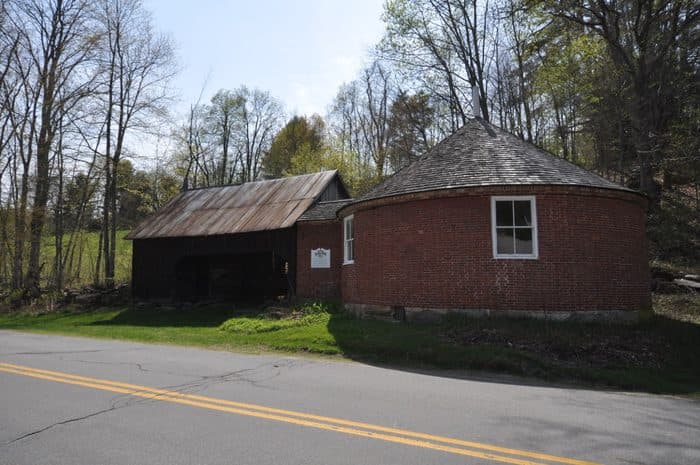
Round Schoolhouse
Japan · Hokkaido
Investigation Summary
The “Round Schoolhouse” in Hokkaido, Japan—often referred to in urban legend as a haunted or abandoned circular school—is not a formally documented or historically recognised educational institution in official records, but rather a location that has gained notoriety through modern Japanese folklore and exploration culture. Stories describing a circular or unusually designed abandoned school building in rural Hokkaido began circulating in the late 20th and early 21st centuries, primarily through word of mouth, magazines focused on “shinrei spots,” and later internet forums. As with many such locations in Japan, the lack of clear documentation has contributed to its mystique, with multiple variations of the story existing and no single confirmed site universally agreed upon.
According to commonly repeated narratives, the school was allegedly closed following a series of unexplained or tragic events involving students or staff, though details vary significantly between accounts. Some versions suggest sudden closure due to accidents, illness, or unexplained behaviour, while others lean more heavily into supernatural explanations, describing disturbances within the building prior to its abandonment. Despite these claims, there is no verifiable evidence in educational or municipal records confirming such events at a specific circular school in Hokkaido.
The region itself, however, does contain many rural communities that experienced depopulation during the late 20th century, leading to the closure of schools and abandonment of buildings, which likely contributed to the development of such stories. In modern times, locations identified as the “Round Schoolhouse” are typically sites discovered or labelled by urban explorers rather than historically designated landmarks. Visitors who seek out these locations often report experiences consistent with other abandoned structures, including unusual acoustics, shifting light conditions, and the psychological impact of isolation.
Anecdotal reports tied specifically to the legend include hearing distant voices or children’s sounds, seeing movement in empty classrooms, or feeling watched within enclosed spaces. However, these experiences are not formally documented and are heavily influenced by the expectations set by the legend itself, as well as the environmental conditions of deteriorating buildings. Conclusion The “Round Schoolhouse” in Hokkaido is best understood as a product of modern urban legend rather than a clearly defined historical site, with its reputation shaped by fragmented stories, exploration culture, and the broader phenomenon of abandoned rural infrastructure in Japan.
While anecdotal reports of unusual experiences exist, they are not supported by verified historical records, making the location an example of how narrative and environment combine to create perceived paranormal significance.